SEP 2025, Vol 22, Issue 9
Overview
- What You Need to Reach Goals
- ADA’s Interactive Process

What You Need to Reach Goals
Talent alone doesn't guarantee success. It also takes perseverance, the sustained effort toward achieving your goals. We all encounter moments of adversity in our working lives, but it's how we face up to these challenges that determines our success in reaching our potential. Even the most gifted people risk failure if they can't deal with adversity. Let's take a brief look at the challenges faced by Albert Einstein.
After initially dropping out of school and performing unrewarding jobs, Einstein eventually decided to finish his education. However, he failed his college entrance exams the first time and barely passed on a second attempt. Once in classes, his mathematics professor labeled him “lazy.” He graduated near the bottom of his class and was the only graduating student without a job offer. He was unable to be hired as an academic. He failed his military physical. A friend finally found him a job as a patent clerk, a low-level bureaucrat.
And all the while, he continued to pursue physics. Slowly, eventually, he began publishing scientific papers he'd written in his off hours. Today, he is rightly regarded as one of the greatest scientific minds of the 20th century, if not human history. It's safe to say that the world is a better place than it would have been had he given up and stayed a clerk. Einstein was a model of perseverance and an example that regardless of the specific obstacles you're faced with, you can achieve success if you persevere.
Courageous Leaders
Pretending to be fearless no matter how good the reasons to be afraid or acting like a know-it-all no matter how obvious it is that neither you nor anyone else has all the answers, isn’t impressive. It’s dangerous — for yourself and for those who depend on you.
As Aristotle noted over 2,000 years ago there’s clearly a difference between courage and foolhardiness. It’s foolish, not courageous, to lead a hiking group toward a bear that will obviously kill you all for no good reason. Likewise, leading people in your organization into all kinds of trouble because you couldn’t acknowledge you were afraid or needed others’ expertise isn’t courageous. It’s dangerous.
Consider this, once people know you’re competent, it makes you look stronger (not weak) when you admit “I don’t know” or say, “Please help with this.” Think about the myriad difficulties faced during the Covid-19 pandemic. Did you admire and feel more drawn to your leader if they came online and acted as if nothing at all was troubling them? Or, instead, when they also admitted they were facing a series of work and life challenges unlike any in the past, but was committed to getting through it together and becoming stronger as a group as a result?
The same is true with apologies. When a leader genuinely says, “I’m sorry, I messed that up,” we see that person as more likeable and more trustworthy. We want to help make the situation better. In contrast, we don’t think someone is a good leader or a hero because they cover up mistakes with lies or omissions. We think they’re weak or a jerk, and we try to distance ourselves as quickly as possible.
Courageous leaders put principles first: Real leadership isn’t about winning a popularity contest. It’s about doing important work on behalf of others. And because there are always going to be differences of opinion and limited resources, you’re probably not going to make much progress on that important work if you can’t stand the thought of upsetting some people some of the time.
Michael Bloomberg clearly understood this during his tenure as Mayor of New York City. “If I finish my term in office… and have high approval ratings, then I wasted my last years in office,” he said. “You always want to press, and you want to tackle the issues that are unpopular, that nobody else will go after.” If things are going pretty well, he said, you’re skiing on what for you is a bunny hill and it’s time to move to a steeper slope.”
Leadership as a popularity contest is, in short, a high-school or Hollywood view of leadership. Good leadership is about being trusted and respected for the defensibility of the decisions you make. It’s about courageous action to defend core principles, even when it costs something significant — potentially even one’s own popularity or standing in the short run.
Courageous leaders focus on making environments safer for others: In the vast majority of organizations, entreating people to routinely stick their necks out despite legitimate fear isn’t exactly a sign of strong leadership. Yet that’s what leaders who “encourage courage” are essentially doing. They’re implicitly saying that because they aren’t courageous enough to change the conditions in their organization to make it safer for people to be honest, try new things, or take other prudent risks, everyone else should be courageous enough to do them anyway.
Sadly, that’s not going to create an environment where people routinely do more of the things that are needed for individuals or organizations to learn, change, and thrive. Even superheroes know this doesn’t work. They don’t spend their time trying to make everyone else a superhero; they spend their time trying to create safer conditions where courageous action isn’t routinely called for.
The leaders we need today surround themselves with, and promote, people who help them learn by challenging rather than flattering them. They reward rather than punish those who try new things, even when they don’t go well. They change outdated systems that exclude diverse perspectives.
The leaders we need today demonstrate, rather than demand, courageous action. They choose, to be vulnerable — even if their position, gender, race, or other status markers mean they don’t have to.
- - - -
ADA’s Interactive Process
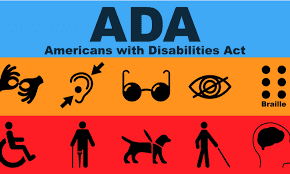
Many employers would appreciate a clear road map when traveling the often-winding roads of reasonable accommodations under the Americans with Disabilities Act (ADA). However, there are no rigid routes for the interactive process. After an employee requests an accommodation, the employer must engage in a good faith and flexible dialogue that addresses the employee’s specific medical limitation, request, job position, and work environment, among other factors.
An employer’s duty to engage in the interactive process is triggered whenever it learns that an employee needs an accommodation. Courts give employees wide latitude in how they make this known. The employee need not make the request in writing, identify a specific accommodation, or use specific terms such as “disability,” “ADA,” or “reasonable accommodation.”
To start the interactive process, an employer should gather information from the employee, including the specific nature of the limitation, the specific difficulty or issue that the employee is experiencing at work, and what sort of accommodation the employee is seeking.
An employee is entitled to a reasonable and effective accommodation – not necessarily the accommodation of his or her choice.
If an employer can reasonably accommodate an employee, it is advisable to keep the interactive process open even after the accommodation is implemented. The employer should reach out to the employee to ensure that the accommodation was provided as discussed and that it is indeed effective in enabling the employee to perform his or her job.
- - - -
*Contact HR Strategies at 302.376.8595 or info@hrstrategies.org if you would like support or would like to learn more about the items in this newsletter. Please contact us if you would like to be added to our Monthly Strategies mailing list or if you would like for us to add someone to our mailing list. *